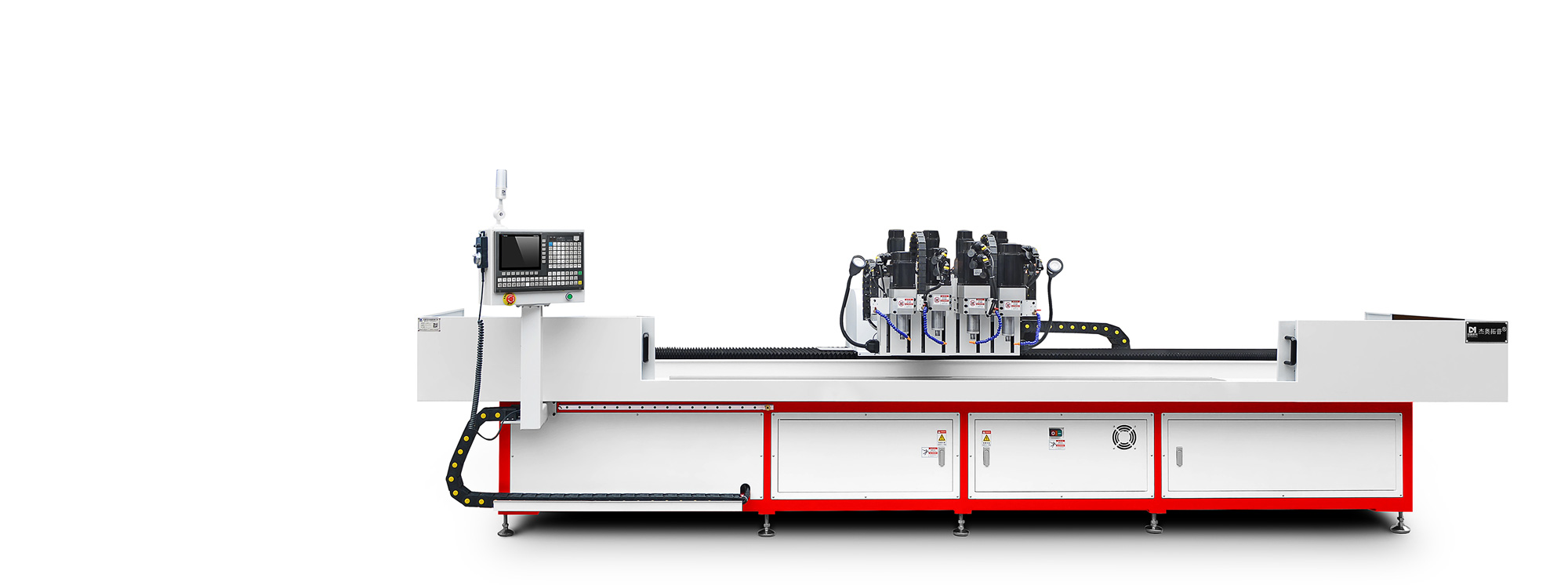
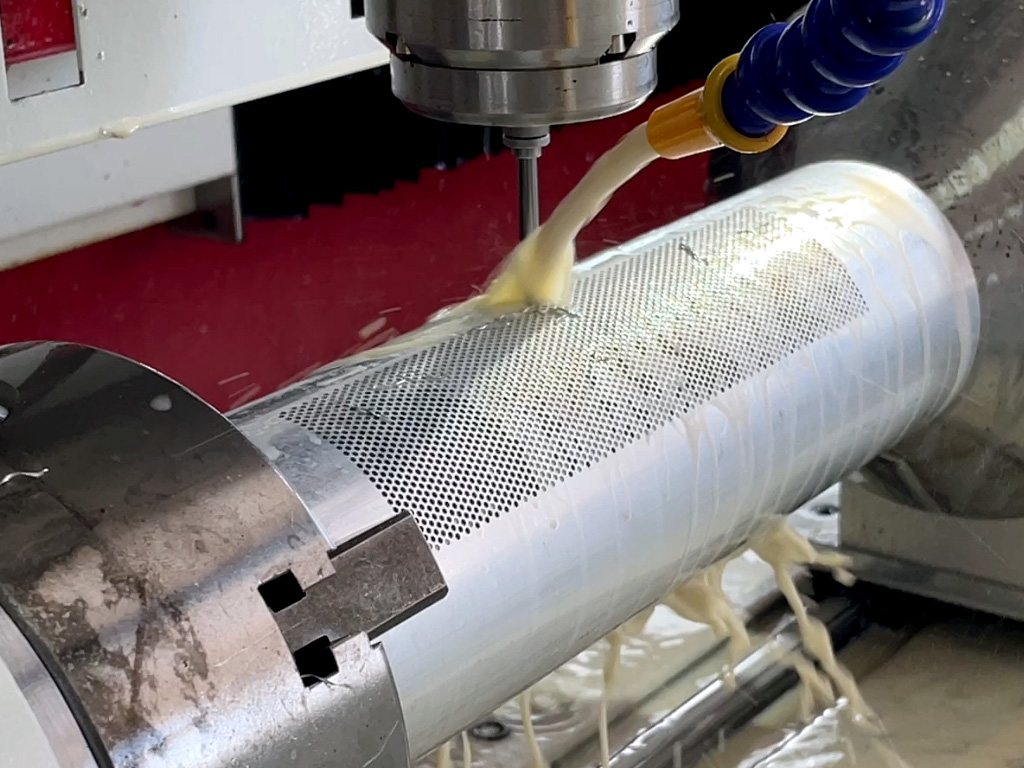
What Is CNC Multi-Hole Drilling? CNC multi-hole drilling refers to the automated process of drilling multiple holes in a workpiece using a computer-controlled machine. The process is programmed through CNC (Computer Numerical Control), which allows precise positioning and repeatable operations.
In modern manufacturing, efficiency and precision are no longer optional—they are essential. Industries such as textile machinery, automotive components, and metal fabrication increasingly rely on high-speed, high-accuracy machining processes to remain competitive.
What Is CNC Multi-Hole Drilling
Among these technologies, CNC multi-hole drilling has emerged as a critical solution for producing components that require multiple precisely positioned holes. Whether it is stainless steel frames, structural brackets, or functional connectors, multi-hole drilling plays a vital role in ensuring proper assembly and long-term performance.
But what exactly is CNC multi-hole drilling, and how does it work in real industrial applications?
What Is CNC Multi-Hole Drilling?
CNC multi-hole drilling refers to the automated process of drilling multiple holes in a workpiece using a computer-controlled machine. The process is programmed through CNC (Computer Numerical Control), which allows precise positioning and repeatable operations.
Unlike traditional drilling, where holes are created one by one manually or semi-automatically, CNC multi-hole drilling can:
Drill multiple holes in a single setup
Maintain consistent spacing and alignment
Reduce human error
Increase production efficiency
This makes it particularly valuable in industries where parts require repetitive hole patterns with tight tolerances.
How CNC Multi-Hole Drilling Works
1. CAD/CAM Programming
The process begins with designing the workpiece using CAD software. Hole positions, diameters, and depths are defined precisely.
The design is then converted into CNC machine instructions using CAM software.
2. Machine Setup
The workpiece is fixed securely using fixtures or clamps. Proper positioning ensures accuracy and prevents vibration during drilling.
3. Tool Selection
Appropriate drill bits are selected based on:
Material type (e.g., stainless steel, aluminum)
Hole diameter
Depth requirements
4. Automated Drilling Process
The CNC machine executes the programmed instructions, moving the spindle to each coordinate and drilling holes in sequence or simultaneously.
5. Optional Tapping or Secondary Operations
In many applications, drilling is followed by tapping or forming threads within the same setup.
CNC multi-hole drilling is a powerful solution for modern manufacturing, enabling high precision, efficiency, and scalability. By replacing traditional methods with advanced CNC technology, manufacturers can significantly improve productivity and product quality.
Call to Action
Looking to upgrade your production with CNC multi-hole drilling solutions?
Contact us today to get expert recommendations tailored to your application.
FAQ
1. What is CNC multi-hole drilling used for?
It is used to create multiple precise holes in metal parts, commonly in industries like textile machinery and automotive manufacturing.
2. How does CNC multi-hole drilling improve efficiency?
It automates the drilling process, reduces cycle time, and allows multiple holes to be drilled in a single setup.
3. What materials can be processed?
Stainless steel, aluminum, carbon steel, and other metals.
4. What is the difference between multi-spindle and single-spindle machines?