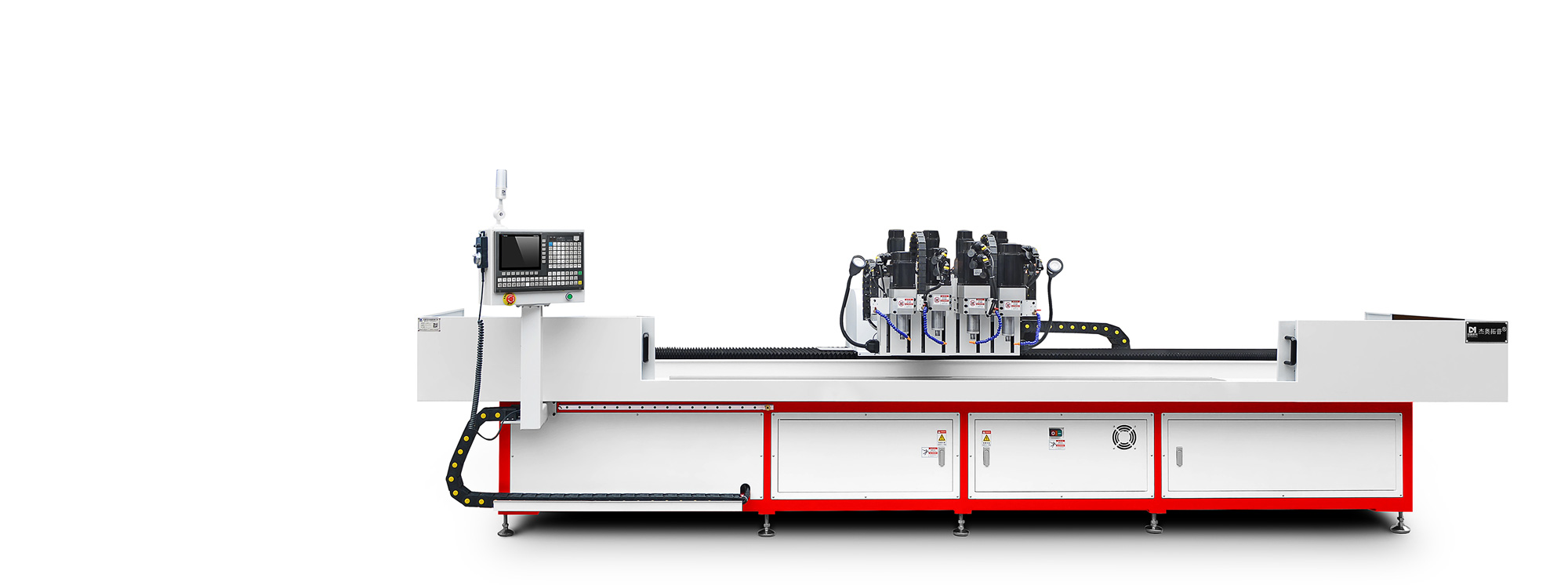
In modern industrial manufacturing, CNC drilling machines are essential for achieving high precision, efficiency, and repeatability. Whether you are processing stainless steel, titanium, aluminum, or mold steel, the success of your drilling operation largely depends on two key parameters: feed rate (F) and peck drilling depth (Q).
Improper parameter settings can lead to tool breakage, poor hole quality, excessive heat, and reduced productivity. On the other hand, optimized settings can significantly improve machining efficiency, extend tool life, and ensure stable production.
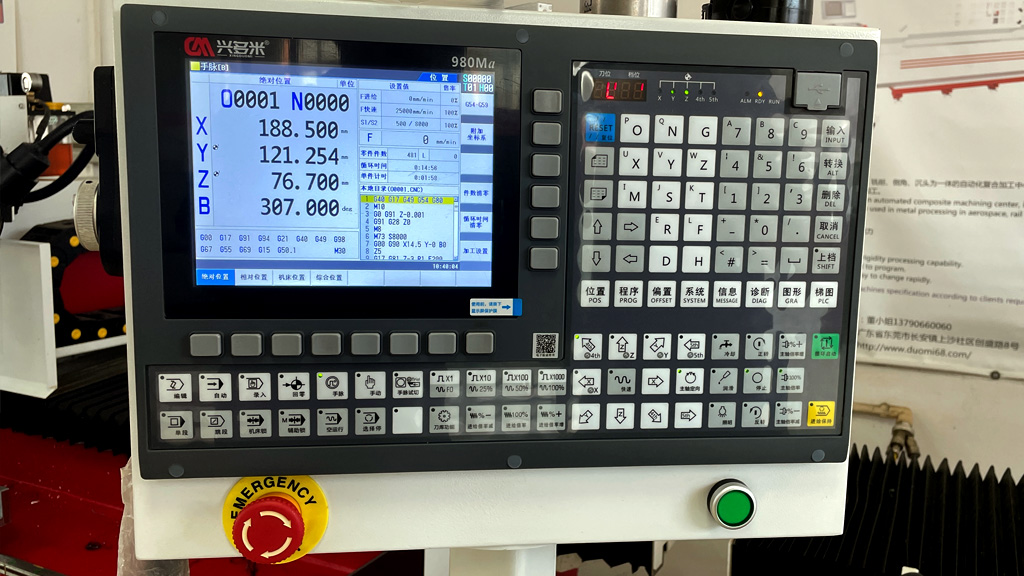
CNC Drilling Machine Optimization: Feed Rate (F) and Peck Depth (Q) Guide
As a professional CNC drilling machine manufacturer, DUOMI CNC provides advanced drilling solutions and engineering support to help customers optimize these parameters for different materials and applications.
This guide will provide a complete explanation of how to optimize feed rate and peck drilling depth for industrial CNC drilling operations.
What Is Feed Rate (F) in CNC Drilling?
Feed rate (F) refers to the speed at which the cutting tool moves into the workpiece during machining. It is usually measured in millimeters per minute (mm/min).
In CNC programming, feed rate is defined using the F code, for example:
G01 X100 Y50 F200
This means the tool moves at a feed rate of 200 mm/min.
Why Feed Rate Is Critical
Feed rate directly impacts:
If the feed rate is too high, the tool may break or produce poor-quality holes. If it is too low, productivity decreases and heat accumulation may damage the tool.
How to Optimize Feed Rate (F)
1. Material-Based Optimization
Different materials require different feed rates:
Aluminum:
High feed rate can be used due to its softness and good chip evacuation.
Stainless Steel:
Moderate feed rate is recommended to prevent overheating and tool wear.
Titanium:
Low feed rate is necessary due to high hardness and low thermal conductivity.