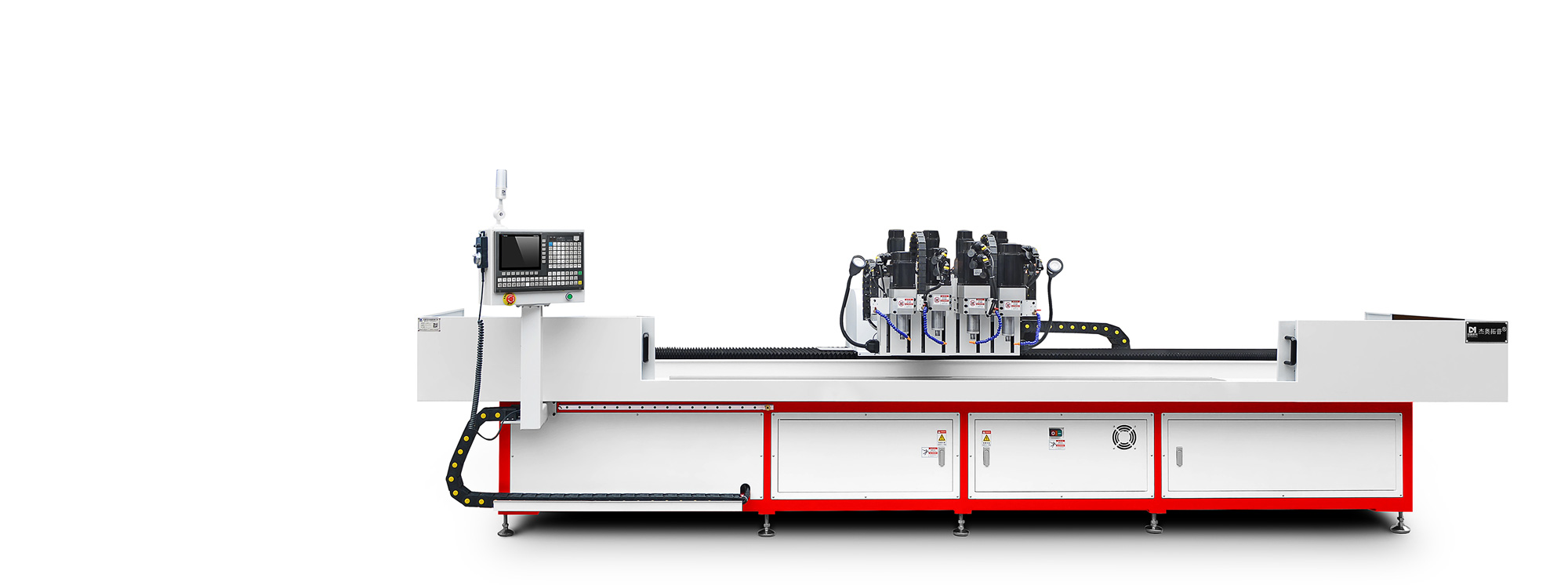
Economic Value of Four-Spindle Drilling and Tapping Machine
01/30/2026
In this project, the customer introduced a four-spindle horizontal drilling and tapping machine with the intention of improving both productivity and cost structure.
Business Impact Report: Four-Spindle Horizontal Drilling and Tapping Machine and Its Economic Value in Customer Production
1. Manufacturing Investment from a Business Perspective
In metal processing industries, equipment selection is rarely based on technical performance alone. Production managers and company owners evaluate machines primarily through their impact on operating cost, delivery capability, and order stability. A new machine is considered successful only when it improves financial outcomes rather than simply increasing machining speed.
In this project, the customer introduced a four-spindle horizontal drilling and tapping machine with the intention of improving both productivity and cost structure. The goal was not to replace workers, but to reduce inefficient manual operations and stabilize output under increasing order pressure.
This article focuses on the commercial effects observed after the machine was integrated into daily production.
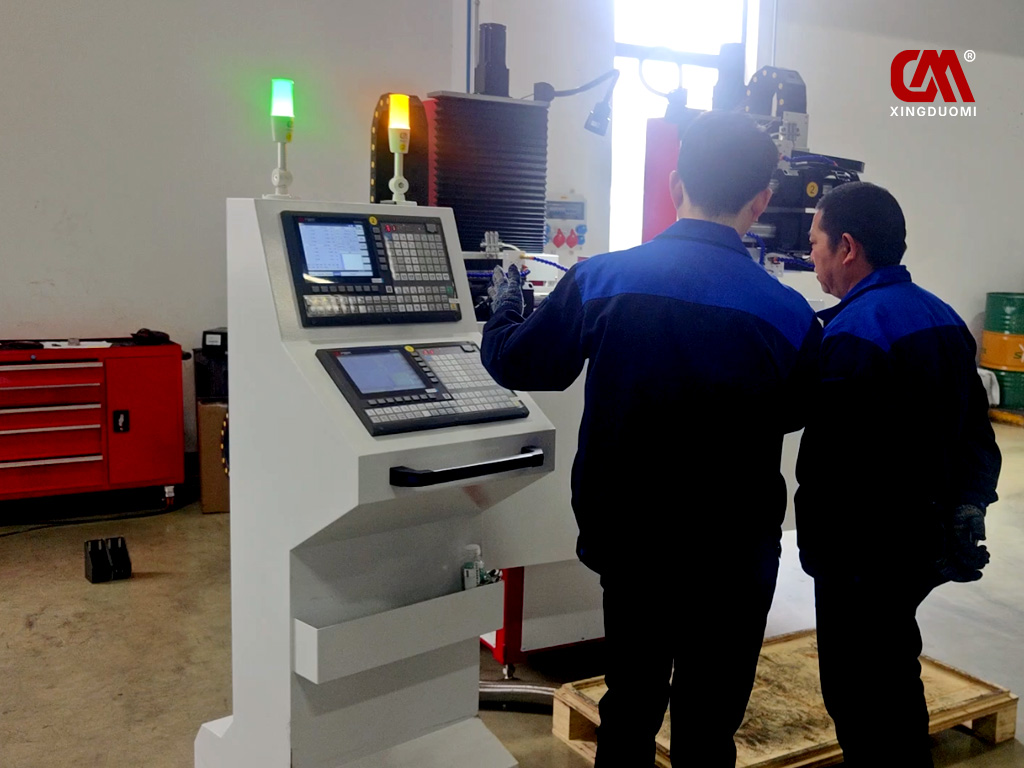
Business Value of Four-Spindle Drilling and Tapping Machine
2. Labor Cost Optimization
Before the upgrade, drilling and tapping tasks were distributed across multiple stations. Operators had to reposition workpieces several times and monitor each hole individually. This resulted in:
Higher labor intensity
Longer processing time per part
Increased dependence on skilled operators
After adopting the four-spindle horizontal drilling and tapping machine, multiple machining steps were combined into a single operation. Operators now focus mainly on loading and unloading materials instead of repeated alignment.
From a management point of view, this change led to:
Lower labor hours per finished part
Reduced overtime during peak production
Easier training for new operators
Rather than expanding workforce size, the customer was able to meet higher order volumes with existing staff.
3. Shorter Production Cycles and Faster Delivery
Delivery time is a decisive factor in industrial contracts. Long processing cycles limit how many orders a factory can accept.
With the previous setup, drilling and tapping were carried out sequentially. Each repositioning step added waiting time and increased the risk of error.
The four-spindle horizontal drilling and tapping machine shortened the cycle by completing several holes in one run. This made processing time per part more predictable and allowed planners to estimate delivery schedules more accurately.
As a result, the customer gained:
Shorter lead times for standard orders
Higher confidence when committing to deadlines
Greater flexibility in handling urgent jobs
This improvement directly strengthened their position in contract negotiations.
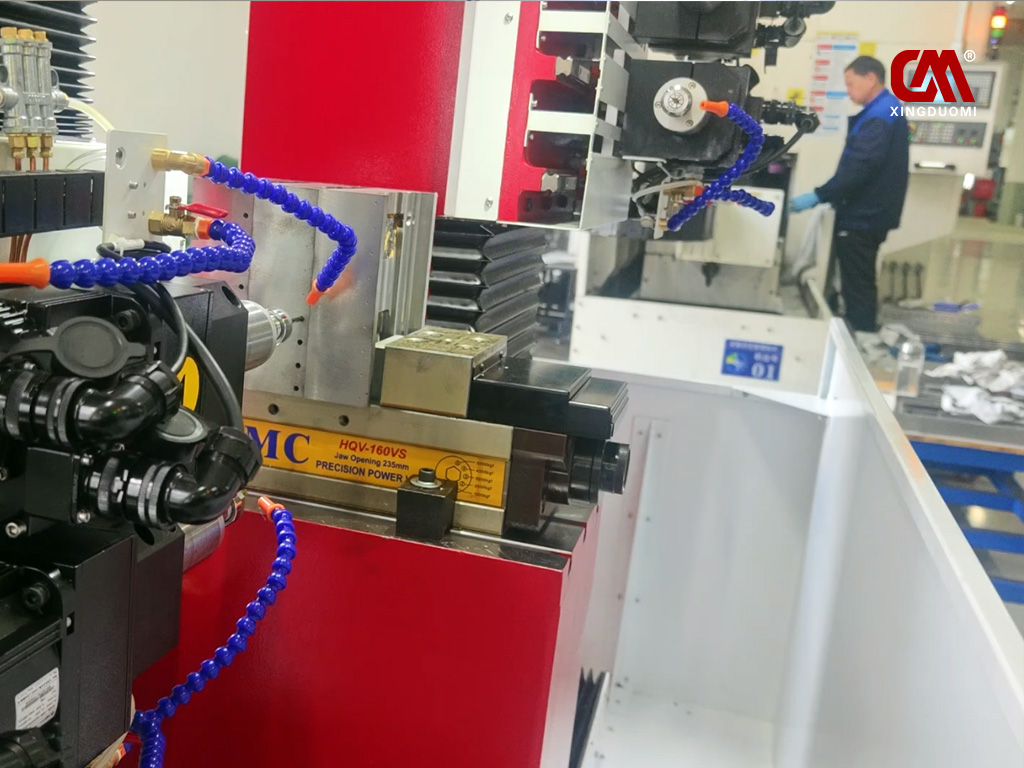
Customer Production Gains with Four-Spindle Drilling Machine
4. Reduction of Rework and Scrap
From a business standpoint, scrap and rework are hidden costs. Even small alignment errors can result in rejected parts or manual correction.
After implementing the four-spindle horizontal drilling and tapping machine, hole positions and thread quality became more consistent. The machine follows a fixed program path, eliminating variation caused by manual repositioning.
Quality inspection data showed fewer rejected parts during batch production. This led to:
Lower material waste
Less time spent on corrections
Improved utilization of raw materials
For the customer, these gains translated into measurable cost savings per production batch.
5. Better Use of Workshop Space
Another factor influencing business performance is space efficiency. Traditional machining layouts often require several separate drilling stations for different operations.
By consolidating multiple drilling and tapping tasks into one unit, the four-spindle horizontal drilling and tapping machine reduced the need for multiple machines performing similar functions.
This allowed the customer to reorganize their workshop layout and free up space for:
Additional cutting or welding stations
Material storage
Future production expansion
Optimizing floor space improved logistics flow and reduced internal transport time.
6. Increased Order Capacity
With shorter cycle times and more stable output, the customer's daily production capacity increased. This change affected not only internal efficiency but also external business opportunities.
The customer reported that they could now accept larger batch orders without extending delivery time. This made them more competitive when bidding for long-term supply contracts.
In practical terms, the four-spindle horizontal drilling and tapping machine enabled:
Higher output per shift
More predictable scheduling
Better alignment between sales commitments and production reality
This stability reduced the risk of late deliveries and contract penalties.
7. Cost Structure and Return on Investment
When evaluating the purchase, the customer considered the expected return period based on labor savings, reduced scrap, and higher throughput.
After the machine was put into regular operation, management observed:
Lower cost per machined part
More efficient use of cutting tools
Reduced indirect labor expenses
Although the four-spindle horizontal drilling and tapping machine required an initial investment, its contribution to daily production gradually offset this cost through operational savings.
From a financial perspective, the machine functioned not only as equipment but as a productivity asset.
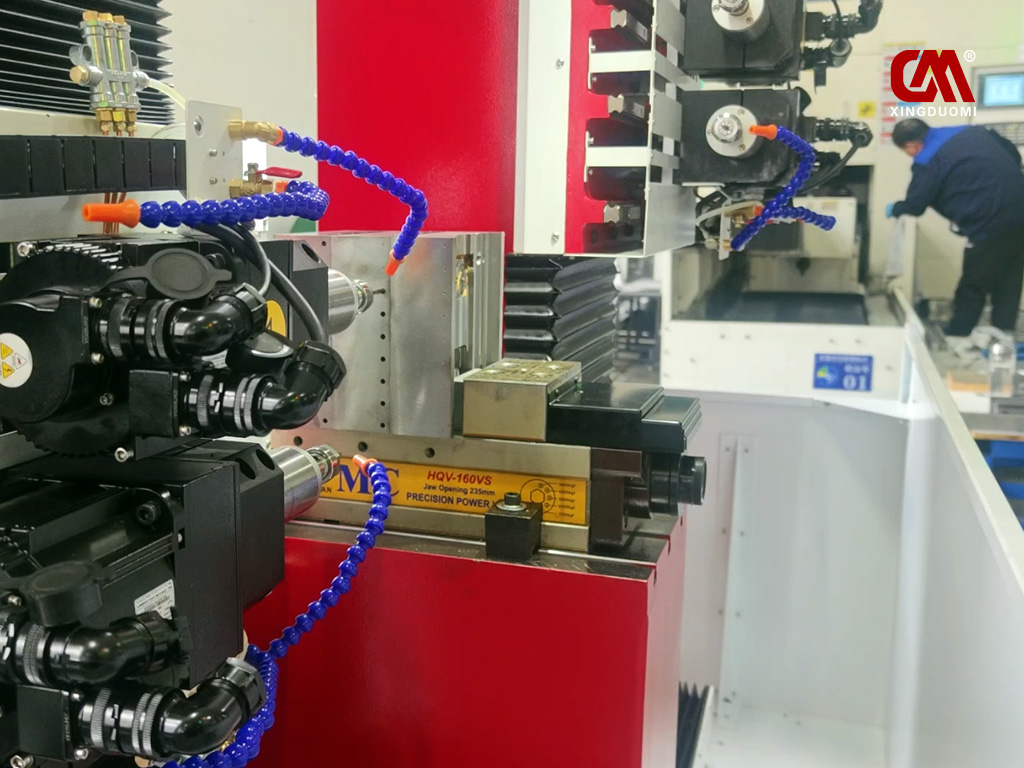
Four-Spindle Drilling Machine of Economic Impact in Production
8. Risk Control in Production Planning
Production risks often come from unstable processes. Manual operations are sensitive to operator experience and fatigue, which can lead to unexpected variations.
With the introduction of the four-spindle horizontal drilling and tapping machine, process stability improved. Once a program was verified, results remained consistent across different shifts.
This stability allowed managers to:
Plan production volumes with higher accuracy
Reduce dependence on individual operator skills
Lower the probability of sudden quality problems
Such control over variability is essential for businesses supplying standardized components to industrial clients.
9. Impact on Customer Satisfaction and Reputation
From a commercial viewpoint, quality consistency and delivery reliability influence long-term customer relationships.
After improving drilling and tapping accuracy, the customer experienced fewer complaints related to hole alignment and thread fit. Assemblers at downstream factories reported smoother installation.
By maintaining stable output with the four-spindle horizontal drilling and tapping machine, the customer strengthened their reputation as a reliable supplier.
This reputation helped support repeat orders and long-term cooperation with their own clients.
10. Flexibility for Future Orders
Markets change, and product designs evolve. Equipment that can handle only one type of part becomes a limitation over time.
The four-spindle horizontal drilling and tapping machine allowed the customer to adjust programs for different hole patterns without altering the basic machining method.
This gave them flexibility to:
Process new product designs
Adapt to small-batch custom orders
Expand into related product categories
Such adaptability increased their ability to respond to market changes without purchasing entirely new equipment.
11. Strategic Role in Business Development
Beyond immediate productivity improvements, the machine played a strategic role in the customer's long-term planning. Management viewed it as part of a broader move toward standardized and repeatable production.
With the four-spindle horizontal drilling and tapping machine, they were able to:
Reduce dependence on manual skills
Establish stable machining procedures
Improve cost predictability
These changes supported future expansion and made the production system more scalable.
12. Conclusion
From a business standpoint, the adoption of a four-spindle horizontal drilling and tapping machine brought measurable benefits beyond machining performance. It reduced labor intensity, shortened delivery cycles, lowered scrap rates, and increased production capacity.
Most importantly, it improved the balance between cost and output. The machine did not merely replace existing tools; it reshaped how drilling and tapping operations fit into the overall production strategy.
For manufacturers seeking to improve profitability while maintaining consistent quality, this case demonstrates that investing in multi-spindle horizontal equipment can produce tangible economic value in daily operations.