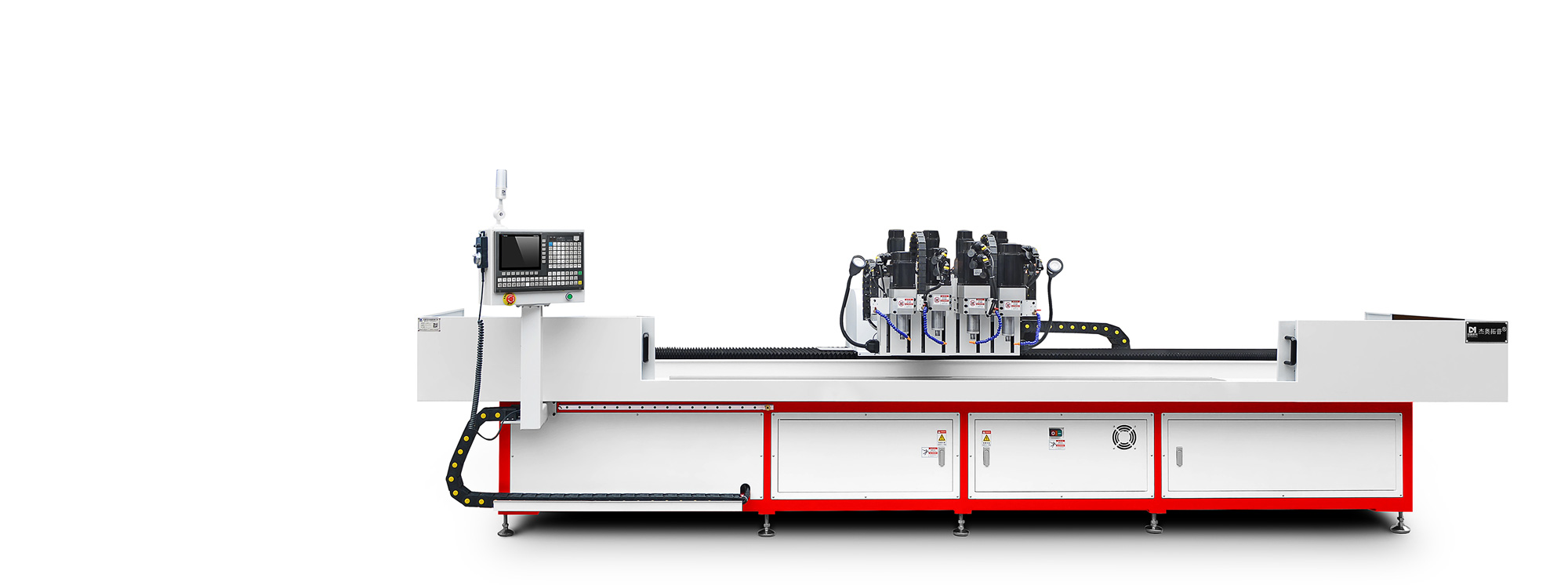
The transition from 2025 to 2026 represents a period of technical consolidation and measured advancement for DUOMI CNC. Rather than treating product development as a series of isolated upgrades, the company approaches machine evolution as a continuous engineering process shaped by real production demands and long-term reliability goals.
For a CNC equipment manufacturer, progress is not defined by novelty alone. It is defined by how well machines perform after thousands of operating hours, under varying workloads, materials, and production conditions. This principle has guided DUOMI CNC’s technical direction as it enters 2026.
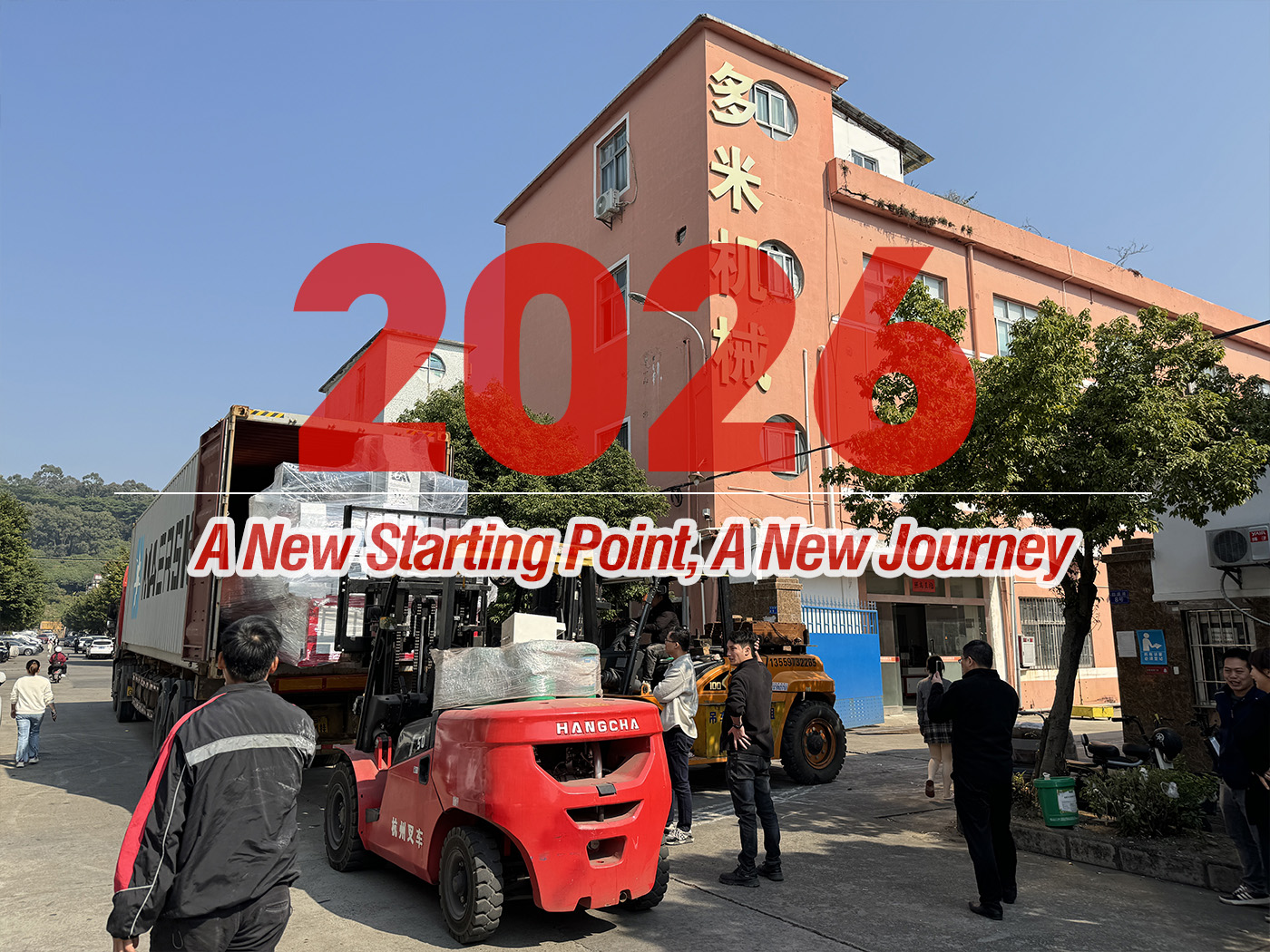
Engineering Continuity as the Basis of Product Evolution
Between 2025 and 2026, DUOMI CNC has focused on maintaining engineering continuity across its CNC drilling, tapping, and drilling-milling platforms. Core machine structures, control logic, and mechanical layouts are not changed arbitrarily. Instead, each modification is evaluated for its impact on long-term stability and serviceability.
This approach ensures that:
Existing machine platforms remain supportable
Spare parts compatibility is preserved
Customer training and operation experience remain consistent
Product evolution, in this sense, becomes cumulative rather than disruptive.
Structural Design Refined Through Use, Not Theory
Machine rigidity remains a central consideration in DUOMI CNC’s development process. While simulation tools play a role during design, final decisions are informed by machine behavior under actual cutting conditions.
From 2025 onward, feedback from high-load drilling and tapping applications has led to targeted structural refinements, including:
Reinforced stress points in machine frames
Optimized load distribution along linear motion components
Improved vibration control during high-speed operation
These adjustments are not visually prominent, but they directly influence machining accuracy and tool life over extended production cycles.
Spindle and Motion System Optimization
As customer requirements continue to emphasize efficiency and repeatability, DUOMI CNC has paid close attention to spindle performance and motion control behavior. Between 2025 and 2026, optimization efforts have focused on achieving a balance between speed and mechanical stability.
Key technical considerations include:
Torque consistency during drilling and tapping
Thermal stability under continuous operation
Smooth axis response during rapid positioning
Rather than pursuing maximum speed figures, DUOMI CNC prioritizes controllable performance that remains stable across different materials and cutting conditions.
CNC Control Logic Focused on Practical Operation
CNC systems play a decisive role in machine usability. Over the past year, DUOMI CNC has refined control logic to support clearer operation sequences and reduced setup complexity.
Adjustments have been made to:
Program flow clarity for drilling and tapping cycles
Error detection and alarm response logic
Operator interface layout for daily production tasks
These refinements help reduce learning curves and minimize operational errors, particularly in workshops running multiple machines or varying production batches.
Tooling Compatibility and Process Integration
One of the consistent technical challenges in drilling and tapping applications is tooling compatibility. Customers often rely on standardized tooling suppliers and expect machines to integrate seamlessly into existing setups.
From 2025 to 2026, DUOMI CNC has continued to:
Align machine interfaces with commonly used tool holders
Support stable performance with thermal drilling tools
Maintain flexibility for different threading standards
This focus reduces additional investment requirements for customers and supports faster production ramp-up.
Quality Control Embedded into Technical Development
Product evolution at DUOMI CNC is closely tied to quality control data collected during assembly and testing. Rather than treating inspection as a final checkpoint, quality metrics are fed back into engineering decisions.
Observed trends in alignment deviation, wear patterns, and operational consistency are used to:
Adjust assembly tolerances
Refine component matching standards
Improve calibration procedures
This closed-loop process ensures that technical development remains grounded in measurable outcomes rather than assumptions.
Preparing Machines for Diverse Production Environments
As DUOMI CNC supplies equipment to customers operating under different production conditions, adaptability becomes an essential design objective. Machines must perform reliably in environments ranging from automated production lines to semi-manual workshops.
To support this diversity, technical development emphasizes:
Stable operation across variable power conditions
Clear mechanical layouts for maintenance access
Robust component selection suited to industrial use
These considerations help ensure that machines perform consistently regardless of location or production scale.
Managing Complexity with Discipline
Modern CNC machines risk becoming overly complex as new functions are added. DUOMI CNC takes a disciplined approach to feature integration, adopting only those functions that provide clear operational benefits.
Between 2025 and 2026, development efforts have focused on:
Avoiding unnecessary system layers
Maintaining clear fault diagnosis paths
Preserving mechanical transparency
This discipline supports easier maintenance and reduces long-term operational risk for end users.
Technical Direction Entering 2026
As DUOMI CNC moves into 2026, its technical direction remains defined by incremental improvement rather than radical redesign. The objective is to enhance machine performance while preserving reliability, serviceability, and consistency across product lines.
Key priorities include:
Continued refinement of drilling and tapping stability
Enhanced alignment retention over machine lifespan
Further integration of production feedback into engineering updates
By maintaining this steady development rhythm, DUOMI CNC ensures that its CNC drilling and milling machines evolve in step with real industrial requirements.
A Manufacturing-Focused Outlook
From a technical standpoint, the shift into 2026 does not mark a departure from established principles. Instead, it reinforces DUOMI CNC’s commitment to manufacturing discipline and practical engineering.
Each machine built reflects accumulated experience rather than isolated innovation. This continuity allows customers to invest with confidence, knowing that product evolution is guided by proven manufacturing logic rather than short-term trends.
As DUOMI CNC enters 2026, its technical path remains clear: develop CNC equipment that performs reliably under real conditions, adapts to changing production needs, and maintains its value throughout years of operation.